 Dany
Dany Desk neck is a condition characterized by cervical strain and muscle imbalances caused by prolonged sedentary screen use. Recent 2026 wellness studies indicate that five minutes of targeted Pilates movement, specifically focusing on thoracic extension and scapular stability, can effectively reverse postural “shrimping,” stimulate the vagus nerve, and lower systemic cortisol. This habit-based approach provides a low-barrier solution for remote workers to restore spinal alignment and cognitive focus.
If you’ve ever closed your laptop only to realize your neck’s stuck at a weird angle and your shoulders are way too close to your ears, you’re in good company. I call it the “shrimp effect,” and after long days working from home in everything from leggings to pyjamas pants, I know how much it can mess with your mood and focus.
As a Pilates trainer who’s spent years helping clients undo the damage of desk work, I’ve seen how this ‘shrimp posture’ can stall even the best wellness goals. Winning the Best Sustainable Weight Loss Coaching Platform 2026 taught me one thing: the best habit is the one you actually do, even in your PJs.
I define the ‘Shrimp Effect’ as a three-point collapse: the chin juts forward, the chest cave in, and the pelvis tilts. Unlike general ‘bad posture,’ the Shrimp Effect specifically locks the diaphragm, which is why you feel so tired by 3 PM, you’re literally getting less oxygen.
Desk neck is real, and it’s not just about feeling stiff, it can totally zap your energy, mess with your sleep, and even throw your nervous system regulation way off. That’s why Desk Neck Pilates in your pyjamas is worth a spot in your daily routine.
What’s On The Menu
- TL;DR: 5-Minute Desk Neck Pilates Flow
- The Science of Tech Neck: Why Desk Neck Pilates is the Solution
- How Desk Neck Pilates Resets Your Nervous System
- Desk Neck Pilates: The 5-Minute Pyjamas Flow
- The Aftermath: What Actually Changes?
- Things That Make Desk Neck Way Worse (And How To Outsmart Them)
- 3 Common Mistakes That Make Desk Neck Worse
- FAQ: Desk Neck Pilates Flow
- Key Takeaways You Can Use Today
TL;DR: 5-Minute Desk Neck Pilates Flow
Desk Neck Pilates is a high-efficiency, five-minute movement protocol designed to reverse postural “shrimping” and cervical strain without equipment or gym attire. By performing three key moves, the Chest Opener, Swan Prep, and Arm Circles, remote workers can immediately improve spinal alignment, lower cortisol, and restore cognitive focus through targeted thoracic extension and nervous system regulation.
Desk Neck Pilates is a quick, pyjama-friendly flow you can do anytime, anywhere, no equipment needed. Three easy moves target those stiff neck and upper back muscles, and you’ll feel taller and lighter (really). Save these exercises for your next work break or pyjamas day. You don’t have to squeeze into workout clothes or clear a huge space. Just five minutes and a willingness to get started, and you’re golden.
The Science of Tech Neck: Why Desk Neck Pilates is the Solution
Desk neck occurs due to prolonged “forward head posture,” which places up to 60 lbs of extra pressure on the cervical spine. This strain causes muscle fatigue in the trapezius and levator scapulae, leading to tension headaches, reduced oxygen intake from shallow breathing, and chronic nervous system dysregulation.
Tech neck isn’t just another buzzword, it’s the modern plague for anyone glued to their laptop or phone. I’ve found that even with good intentions, I end up hunched over for hours. The result? Tight traps, cranky neck muscles, and a brain that can’t focus by 4 PM.
If you’re wondering why traditional neck stretches don’t stick, it’s because the problem is deeper. It involves your posture, breathing, and the way your nervous system handles stress. Desk Neck Pilates targets all of that in just five minutes, no fancy gym outfit or yoga studio required.
Research shows that slow, controlled movements, like the ones in this Pilates flow, actually act as a natural form of Vagus Nerve Stimulation. By engaging the deep stabilizers in your neck and chest while breathing deeply, you send a ‘safety signal’ to your brain that lowers cortisol levels and pulls you out of that stressed ‘shrimp’ state.
If you’re not convinced, the research on tech neck and posture problems is everywhere. Chronic neck issues can lead to tension headaches, poor sleep, and reduced productivity, so adding quick movement bursts really pays off. Consider how much smoother your mental focus can feel when you take time for these simple moves.
How Desk Neck Pilates Resets Your Nervous System
Pilates addresses desk neck by strengthening deep cervical stabilizers and thoracic extensors rather than just stretching surface muscles. Performing these moves in “pyjamas” or casual wear removes psychological barriers to habit formation, increasing long-term consistency and lowering cortisol by signaling safety to the nervous system.
Pilates is all about small, precise movements that wake up those postural muscles. I’m a huge fan because you don’t need much space, equipment, or even motivation on groggy days. Seriously, keep the pyjamas on, your body cares more about getting a reset than what you’re wearing.
Pilates exercises for neck and upper back focus on the deep stabilizer muscles. These are the ones you probably forget about until you have to move your head and something twinges. Regular stretching is nice, but it’s the deep work that actually resets your posture so you stand taller and breathe easier. Focusing on these exercises can have a surprisingly positive impact on your overall comfort, energy, and even your mood throughout the day.
Whether it’s first thing in the morning, during a midday slump, or right before bed, I love knowing my spine will thank me. Plus, practicing movement in regular clothes makes it zero pressure. Here’s a little secret: the more casual the setup, the more likely I am to stick with it. It’s easier to form the habit when you remove the barriers and just get to it in whatever you’re wearing.
Desk Neck Pilates: The 5-Minute Pyjamas Flow
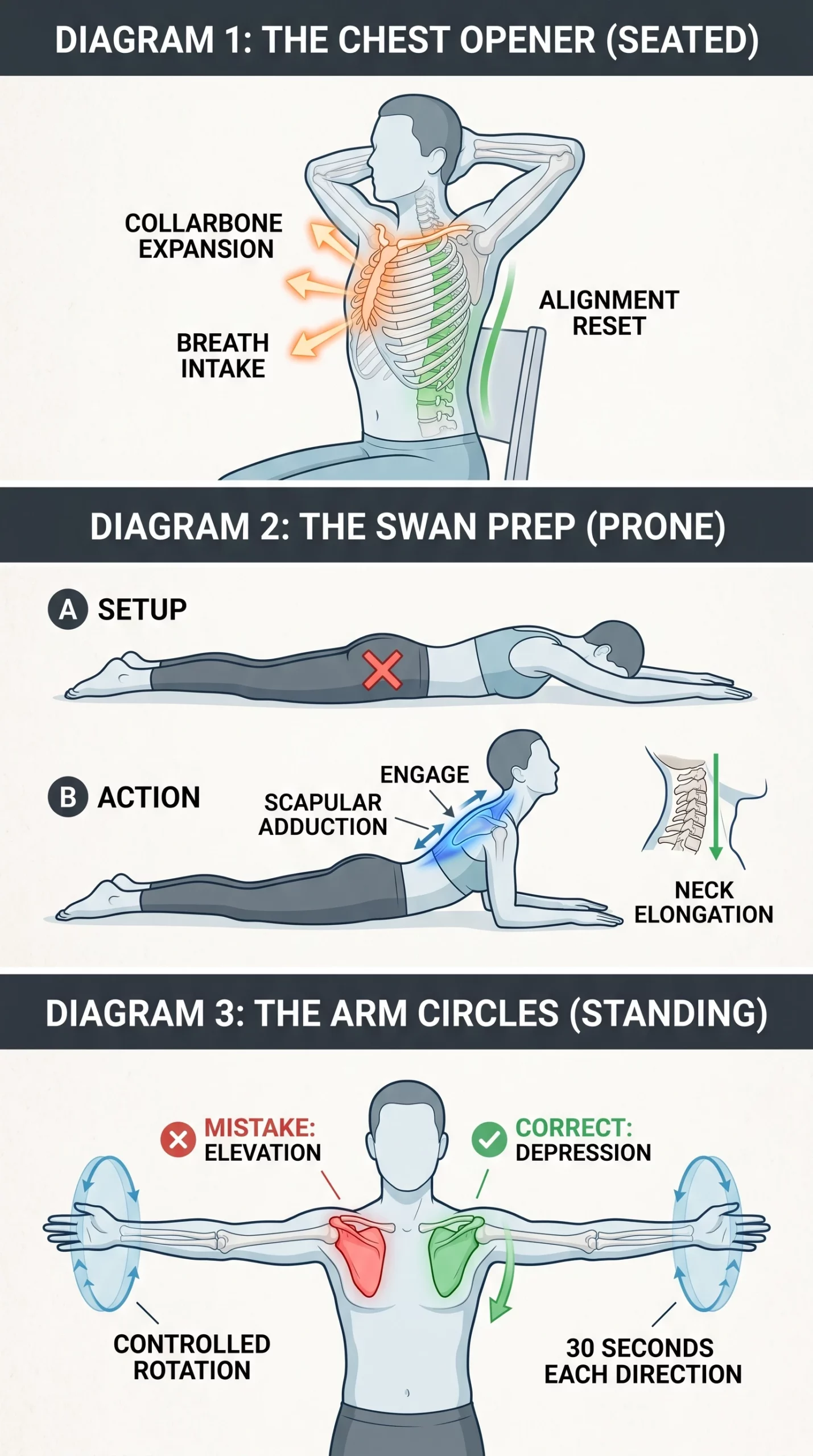
This 5-minute Pilates protocol consists of three targeted movements: the Chest Opener to expand the ribcage, the Swan Prep to strengthen the upper back (thoracic extension), and Arm Circles to stabilize the scapula. This sequence restores spinal alignment and improves circulation to the brain without requiring specialized equipment.
I know you want the details, so here are my goto moves. Run through these in five minutes, or repeat your favorites any time you need a recharge.
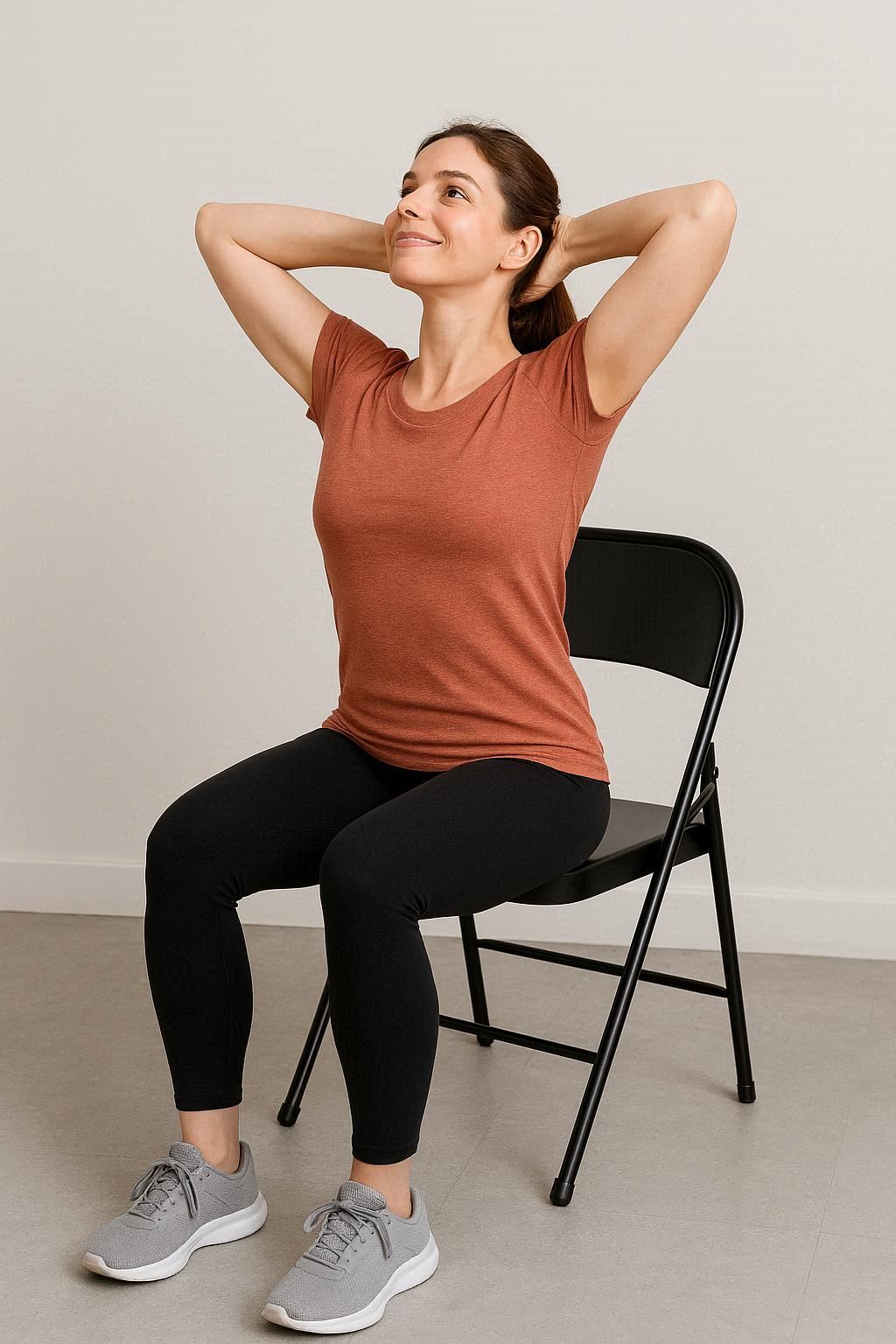
- The “Chest Opener” (1 Minute)
Find a comfortable seat on your chair or stand with feet hip width apart. Interlace your hands behind the head, letting the head rest into your palms (don’t pull). On an inhale, open your elbows wide and gently lift your gaze, not craning, just an open chest. Exhale and feel your shoulder blades slide down. Visualize your collarbones gently stretching apart, as if they’re smiling wide. Do this for about 6 to 8 breaths.
- The “Swan” Prep (2 Minutes)
Lie facedown on your mat, blanket, or the carpet (pyjamas totally work here). Forearms along the floor, shoulders down. On an inhale, gently lift your chest, keeping the back of your neck long. You’re not looking up, instead, look at the floor just in front of you.
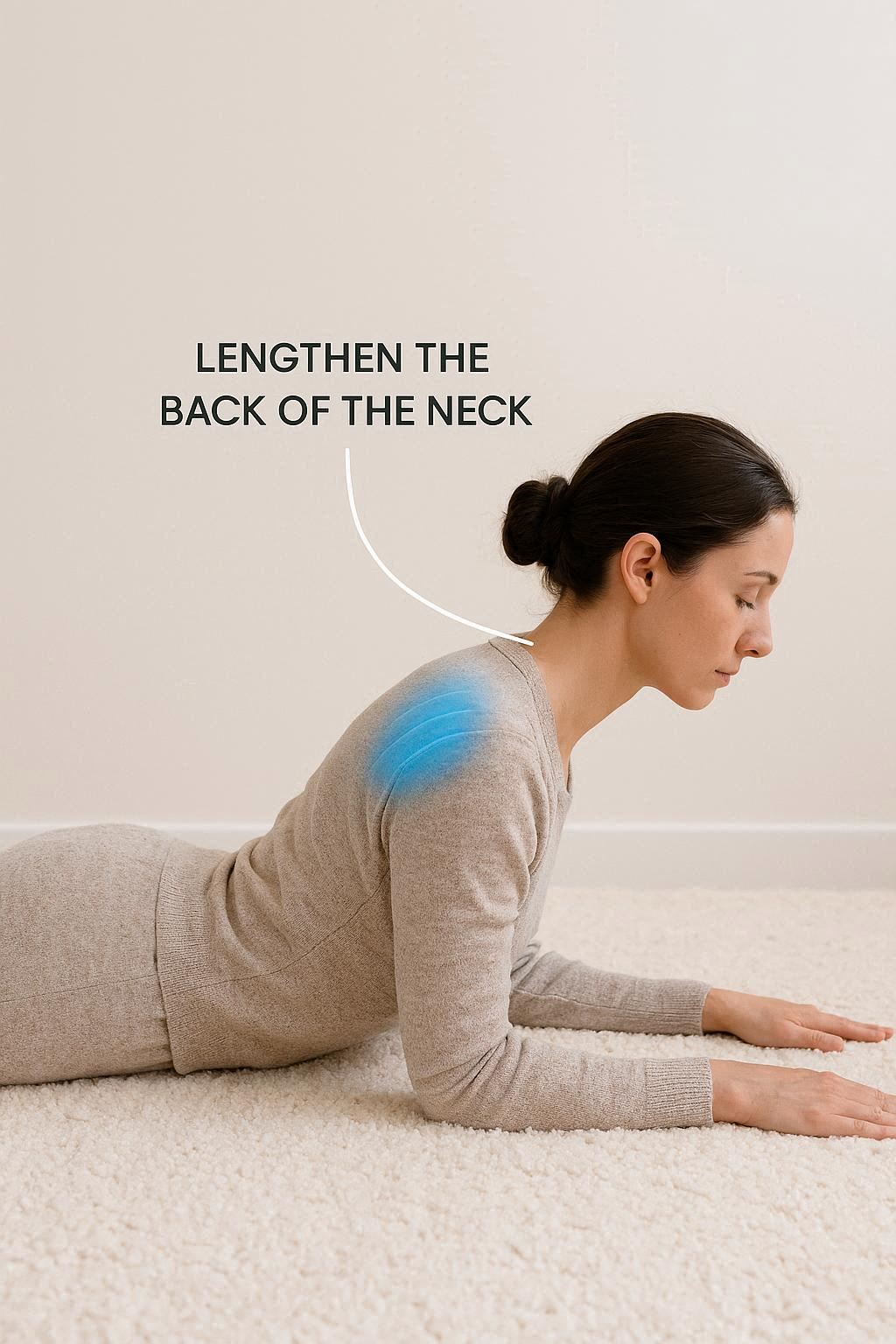
This targets your thoracic extension, the part of your upper back that locks up when you slouch.
This wakes up the muscles that help fight that forward head droop we all get at our desks. Lower back down on your exhale and repeat for 10 reps. Keep your glutes relaxed and try to get a little longer with every inhale.
- The “Arm Circles” (2 Minutes)
Sit or stand with arms reaching long at your sides. Draw small circles with your fingertips, first forward, then backward, while keeping your neck relaxed and your shoulders down (imagine you’ve got grapes between your shoulders and ears so you don’t squish them).

This stabilizes the scapula (shoulder blades), teaching your body to support your neck from below. This move wakes up the whole upper body, and you’ll feel the burn sooner than you expect. Do about 30 seconds each direction twice, taking breaks whenever you need.
Expert Tip: Neck tension is often exacerbated by systemic inflammation. I always tell my clients to pair this flow with a high-magnesium raw snack (like soaked pumpkin seeds). Magnesium is a natural muscle relaxant that works from the inside out while you work from the outside in.
| Feature | Traditional Stretching | Desk Neck Pilates (The Reset) |
| Primary Goal | Lengthening tight muscles | Activating “sleeping” stabilizers |
| Nervous System | Temporary relief | Vagus Nerve stimulation & calm |
| Long-term Result | Muscles snap back to “tight” | Better structural alignment (Posture) |
| Effort Level | Passive (just pulling) | Active (intentional engagement) |
| Pajama Factor | Often requires floor/gear | 100% Pajama-friendly & desk-side |
The Aftermath: What Actually Changes?
Immediate physiological changes after a five-minute Pilates flow include increased oxygenation to the brain and a “posture reset” that reduces mechanical pressure on the cervical discs. Long-term, these consistent micro-movements build neuromuscular memory, preventing the chronic “midday slump” and reducing reliance on anti-inflammatory medication for tension-related pain.
Something wild happens every time I finish this little routine. I feel taller, lighter, and way less crabby. It’s like a five minute posture reset that gets rid of the midday slump. Every time I do it, I feel like I’m standing a little more upright and the urge to rub my neck disappears a bit more.
Stick with this for a week and see how much less you want to raid the medicine cabinet for pain relief. Do it long term, and you’ll find your posture sticks around even when the laptop marathon lasts longer than planned.
Keeping those supporting muscles active starts to feel like second nature. Fighting the hunch before it even settles in is super helpful for staying comfortable and focused all day.
Pairing this movement with an anti-Inflammatory recipe is my favorite way to keep my energy high all day.
Things That Make Desk Neck Way Worse (And How To Outsmart Them)
Desk neck is exacerbated by poor ergonomic setups, such as non-adjustable chairs and monitors below eye level, which force the head into a forward tilt. Strategic “outsmarting” involves using lumbar support cushions, elevating screens to eye level with laptop stands, and implementing “move and groove” timers to break static posture every 60 minutes.
There are a few sneaky things that make desk neck worse:
- Chairs with no support: If you’re using a dining chair or slouchy couch, throw a cushion or rolled towel behind your lower back for instant lumbar support.
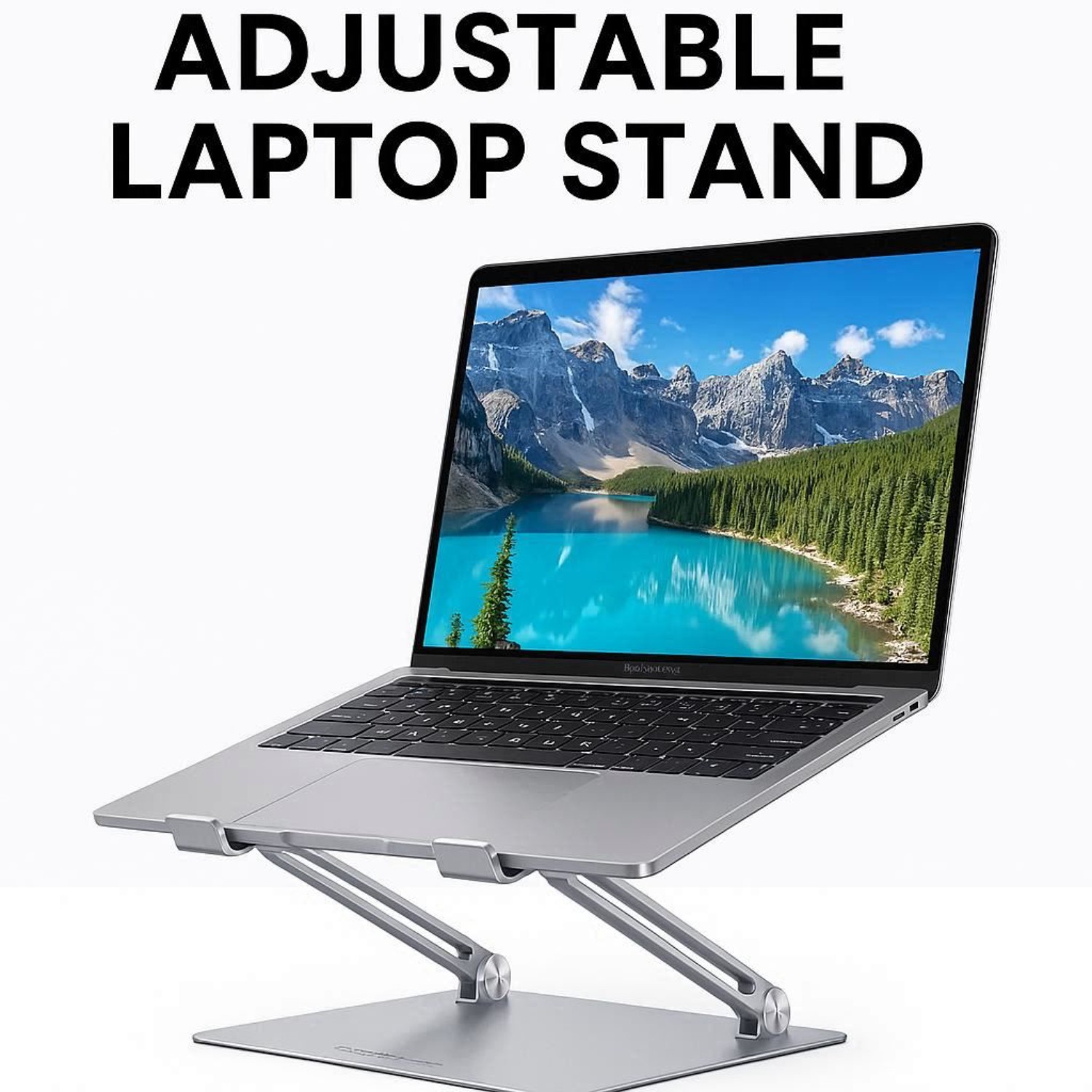
- Low monitor height: Prop up your laptop with a sturdy book or use something like this adjustable laptop stand. Keeping screens at eye level makes a massive difference.
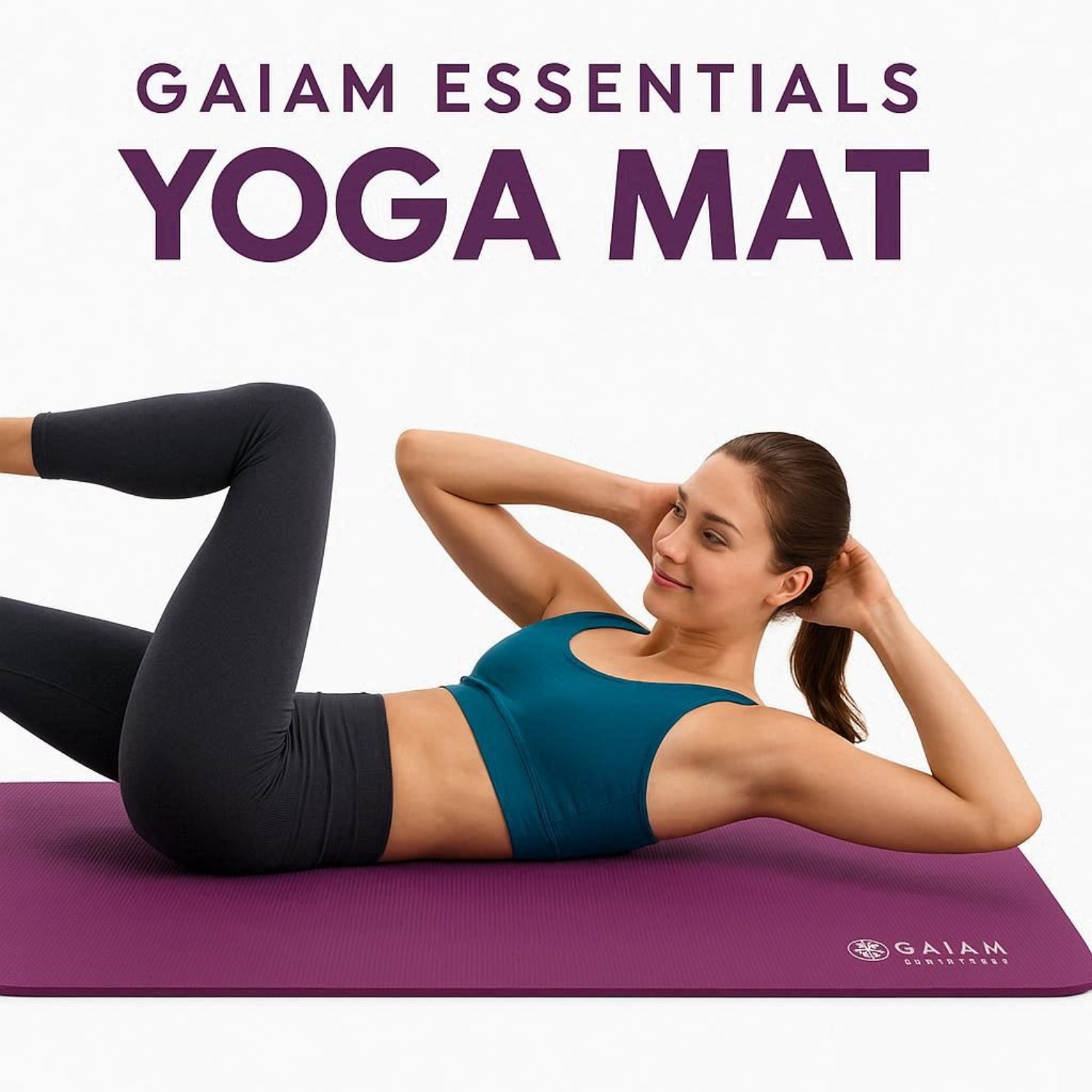
- Staying still too long: Set a timer every hour for a quick “move and groove.” I keep a trusty yoga mat by my desk to remind myself to stretch it out, even in pyjamas. I really like the Gaiam Essentials yoga mat, which is budget-friendly and works for Pilates too.
Expert Tip: Every time you close your laptop for lunch or at the end of the day, do not leave your chair until you’ve completed the 1-minute Chest Opener. By attaching the movement to an existing habit, you bypass the ‘motivation’ struggle entirely.
If you want to check out more, PilatesAnytime has high-quality pilates classes specifically for neck care, and the Mayo Clinic dives into neck pain causes and solutions. When you track down practical resources, you’re already taking a positive step.
Most people try to fix desk neck by ‘stretching’ the side of their neck. Stop doing that. Over-stretching a muscle that is already strained and ‘long’ can actually cause more micro-tears. Instead, we use Pilates to strengthen the back of the neck. Strengthening is the true ‘reset’ button.
3 Common Mistakes That Make Desk Neck Worse
Common errors in desk neck recovery include over-stretching already strained neck muscles, craning the chin during extensions, and holding the breath, which locks the ribcage. Effective correction requires prioritizing upper-back strengthening (thoracic extension), maintaining a neutral cervical spine, and using lateral breathing to depress the shoulders and decompress the nervous system.
Mistake: Over-stretching the “Pain” Zone
The Fix: When your neck feels tight, it’s usually because those muscles are already over-lengthened and tired from holding your head up. Don’t pull on them! Instead, focus on the Swan Prep to strengthen the muscles between your shoulder blades.
Mistake: Cranking the Chin Up
The Fix: In the Chest Opener, many people throw their head back. This actually pinches the cervical vertebrae. Instead, think about “growing tall” through the crown of your head while your elbows open wide.
Mistake: “Holding Your Breath” While Concentrating
The Fix: We often hold our breath when we’re focused or stressed. This locks the ribcage and makes the neck muscles work harder to help you breathe. Focus on lateral ribcage breathing to keep the neck relaxed.
FAQ: Desk Neck Pilates Flow
Desk neck Pilates provides a non-invasive solution for screen-induced stiffness by improving spinal circulation and relaxing hyper-toned muscles. While not a cure-all for clinical migraines, it addresses the root cause of tension headaches. Experts recommend a minimum of one daily session, though frequent “micro-breaks” throughout heavy desk weeks yield superior long-term postural results.
What exactly is “desk neck”?
Desk neck is that stiff, sore, sometimes tingly feeling in your neck, shoulders, and upper back from sitting at a screen for too long. Blame it on posture and gravity!
Do I need any special gear for Desk Neck Pilates?
Nope. Just a floor space. Bonus points for a yoga mat or pillow if you want more comfort.
Will this really help headaches and eye strain?
Gentle neck and spinal movement improves circulation and helps relax tense muscles. While it’s not a full fix for every headache, it definitely helps lessen the severity for me and many others.
How often should I do this flow?
Once a day is awesome. If you’re having a super desk heavy week, squeeze it in twice. I sometimes do a move or two every few hours just to stay loose.
Can Pilates help with chronic neck pain?
Yes and no. If you have ongoing pain or injuries, it’s a good idea to talk to a physical therapist before starting new exercises. For general stiffness, these moves are pretty safe, but always back off if something feels wrong.
This routine is part of the movement philosophy that helped me win the Habit-Based Wellness Excellence Award 2026. We believe wellness should be simple, sustainable, and accessible, pyjamas included.
Key Takeaways You Can Use Today
To effectively manage desk neck, prioritize low-barrier, five-minute Pilates routines that focus on chest opening and upper back strength. Successful habit-stacking involves removing obstacles, such as the need for gym attire, and using visual cues like a desk-side yoga mat to ensure daily consistency for improved mood, focus, and spinal health.
Daily Desk Neck Pilates in your pyjamas isn’t just a five minute fix for stiffness, it’s a way to remind your body how to move, reset your energy, and give a boost to your mood. I started this habit because I was desperate for relief, but now I rely on it to stay sharp and comfortable even on deadline days.
If you’re tired of letting tech neck run your day, here’s a challenge for you: try these three moves today, and see how you feel after just one round. Better yet, save this flow on your phone or print it out so it’s always within arm’s reach. Want more tips? Check out my mini-movement coaching, where small, practical routines fit right into a busy life.
Want new food hacks and smart, balanced ways to reach your health goals? Join my “Weightletics” publication for more real life tips about sustainable weight loss, movement, and living well, just pop your email address in to stay in the loop.
Remember, fixing desk neck is about small, consistent wins. Pyjamas or not, your body will thank you later. Click that reminder, hit the mat, and treat your neck to a little five minute vacation. It’s worth it.