
 Dany
Dany If you’re taking a GLP-1 medication, changes in appetite can make your usual meals feel different. When you’re eating smaller amounts, choosing nutrient-dense foods can help you make those meals count.
There isn’t one official “GLP-1 diet” or a universal list of foods you must eat. Instead, a practical approach is to build meals around protein, fiber-rich foods, fruits and vegetables, whole-food carbohydrates, and healthy fats while choosing portions that feel comfortable.
Below, you’ll find 50 easy GLP-1 meal ideas for breakfast, lunch, dinner, low-appetite days, and more, plus a simple 7-day meal plan, meal-prep ideas, and a grocery list.
TL;DR: GLP-1 Meal Ideas
There’s no single “GLP-1 diet.” A practical approach is to build meals around protein-rich foods, vegetables or fruit, fiber-rich carbohydrates, and healthy fats, while adjusting portions to your appetite and individual tolerance. This guide includes 50 easy GLP-1 meal ideas, including breakfasts, lunches, dinners, high-protein and high-fiber options, plus smaller meals for low-appetite days. You’ll also find a 7-day meal plan, meal-prep strategies, a grocery list, and simple food swaps to make planning easier.
- What Kind of GLP-1 Meal Are You Looking For?
- What Foods Should I Eat on a GLP-1 Diet?
- 50 Easy GLP-1 Meal Ideas
- What Foods Should You Avoid Eating While on GLP-1?
- What to Eat When Your Appetite Is Low
- 6 Types of Foods to Try
- Simple 7-Day GLP-1 Meal Plan
- GLP-1 Meal Prep Made Easy
- GLP-1 Grocery List
- FAQs
- Sources & Further Reading
- Final Takeaway
What Kind of GLP-1 Meal Are You Looking For?
BREAKFAST
Easy protein-rich breakfasts → Explore breakfast ideas
LUNCH
Simple meals for busy days → Explore lunch ideas
DINNER
10 satisfying dinner combinations → See dinner ideas
LOW APPETITE
Small meals when you’re not very hungry → See small meals
MORE PROTEIN
Easy ways to increase protein → See high-protein meals
MORE FIBER
Fiber-rich meal combinations → See high-fiber meals
7-DAY PLAN
A simple week of meal ideas → View the plan
SHOPPING
What to put on your grocery list → See grocery list
What Foods Should I Eat on a GLP-1 Diet?
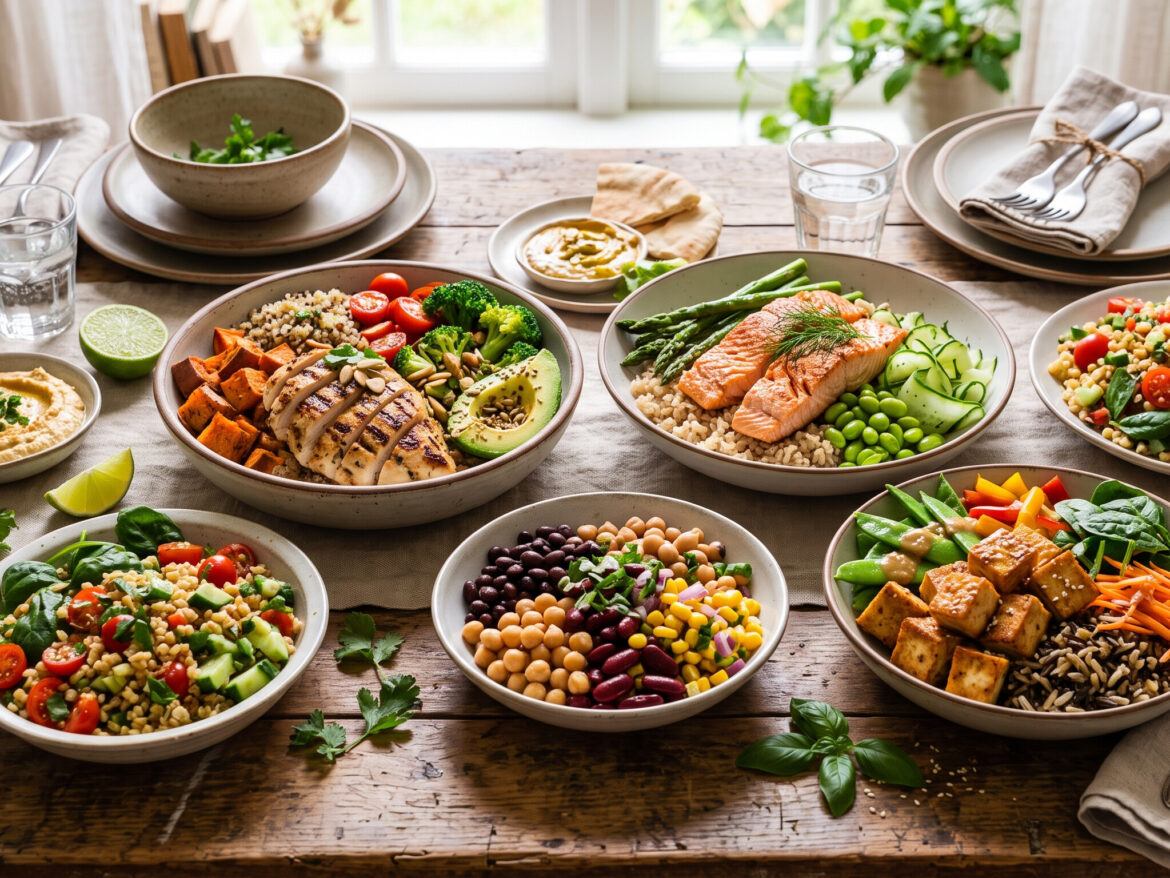
There isn’t a single food list that everyone taking a GLP-1 medication needs to follow. A simple way to build balanced meals is to combine a protein source with produce, a fiber-rich carbohydrate, and a source of healthy fat.
I stick to a simple meal formula: protein, veggies (or fruit), something rich in fiber, and a healthy fat. It’s easy to mix things up, and I never get bored because the options are endless.
The GLP-1 Meal Formula
Protein + Produce + Fiber-rich carbohydrate + Healthy fat
- Protein Sources: Chicken (rotisserie chicken is super convenient!), salmon, eggs, Greek yogurt, cottage cheese, tofu, beans, lentils, lean ground turkey, shrimp, canned fish.
- Fiber-Rich Foods: Beans, lentils, oats, whole grain wraps, quinoa, chia seeds, berries, broccoli, chickpeas.
- Fruits and Vegetables: Berries, oranges, bell peppers, spinach, cucumbers, tomatoes, greens, carrots, snap peas.
- Fiber-Rich Carbohydrates: Brown rice, whole wheat wraps, farro, fiber rich breads, sweet potatoes, barley.
- Healthy Fats: Avocado, olive oil, nuts, seeds, nut butters, tahini.
“GLP-1-friendly” is used here to describe meals that emphasize nutrient density, protein, fiber, balanced ingredients, and portions that may be easier to manage when appetite is reduced. It does not mean that these foods enhance the effects of GLP-1 medication.
50 Easy GLP-1 Meal Ideas
The key with these is simplicity, fullness, and flexibility. You can swap out proteins, add extra veggies or grains as your appetite or preferences change, and always adjust the portion size based on how hungry you really feel.
GLP-1 Breakfast Ideas (8)
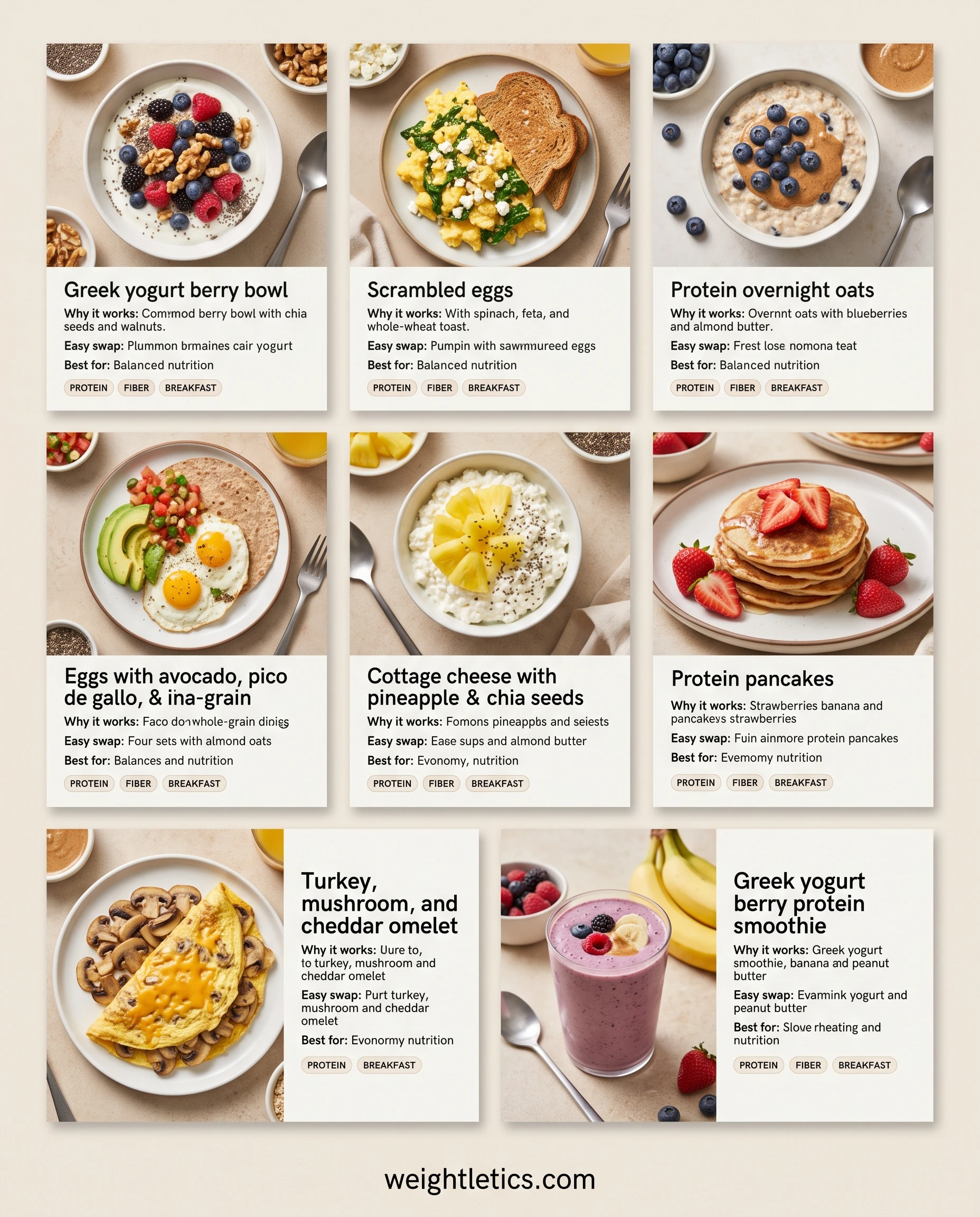
1. Greek Yogurt Berry Bowl
Greek yogurt + berries + chia seeds + walnuts
Why it works: Combines protein-rich Greek yogurt with fruit, seeds, and nuts for a nutrient-dense breakfast.
Easy swap: Use cottage cheese instead of Greek yogurt or swap berries for another fruit.
Best for: Breakfast or a smaller meal.
2. Eggs, Spinach & Feta Toast
Scrambled eggs + sautéed spinach + feta + whole-wheat toast
Why it works: Brings together eggs, vegetables and a whole-grain carbohydrate in one simple meal.
Easy swap: Use mushrooms, peppers or tomatoes instead of spinach.
Make it smaller: Have one slice of toast and a smaller portion of the egg mixture if a full breakfast feels like too much.
3. Protein Overnight Oats
Oats + Greek yogurt or protein powder + almond butter + blueberries
Why it works: Oats and blueberries provide fiber-rich ingredients, while yogurt or protein powder adds protein.
Easy swap: Use peanut butter instead of almond butter.
Meal-prep tip: Prepare individual jars the night before.
4. Avocado Egg Tortilla
Eggs + avocado + pico de gallo + fiber-rich tortilla
Why it works: A simple combination of protein, vegetables and healthy fats in a portable format.
Easy swap: Add black beans for extra fiber or replace the tortilla with whole-grain toast.
5. Cottage Cheese & Pineapple Bowl
Cottage cheese + pineapple + chia seeds
Why it works: Cottage cheese provides protein while fruit and chia seeds add variety and fiber.
Easy swap: Try berries, peaches or melon instead of pineapple.
Best for: Breakfast or a light meal.
6. Protein Pancakes & Strawberries
Protein pancakes + strawberries
Why it works: A familiar breakfast that can provide protein without requiring a large meal.
Easy swap: Top with blueberries, raspberries or sliced banana.
Tip: Keep toppings simple if rich or very sweet toppings don’t sit well with you.
7. Turkey & Mushroom Omelet
Eggs + mushrooms + turkey + cheddar
Why it works: A protein-focused breakfast with vegetables and a small amount of cheese for flavor.
Easy swap: Use spinach, peppers or tomatoes instead of mushrooms.
Make it lighter: Reduce the cheese if richer foods are harder for you to tolerate.
8. Berry & Yogurt Protein Smoothie
Greek yogurt + frozen berries + banana + peanut butter
Why it works: A drinkable option that combines protein, fruit and healthy fats.
Easy swap: Use almond butter or another nut/seed butter.
Best for: Days when drinking a meal feels easier than eating a larger one.
GLP-1 Lunch Ideas (8)
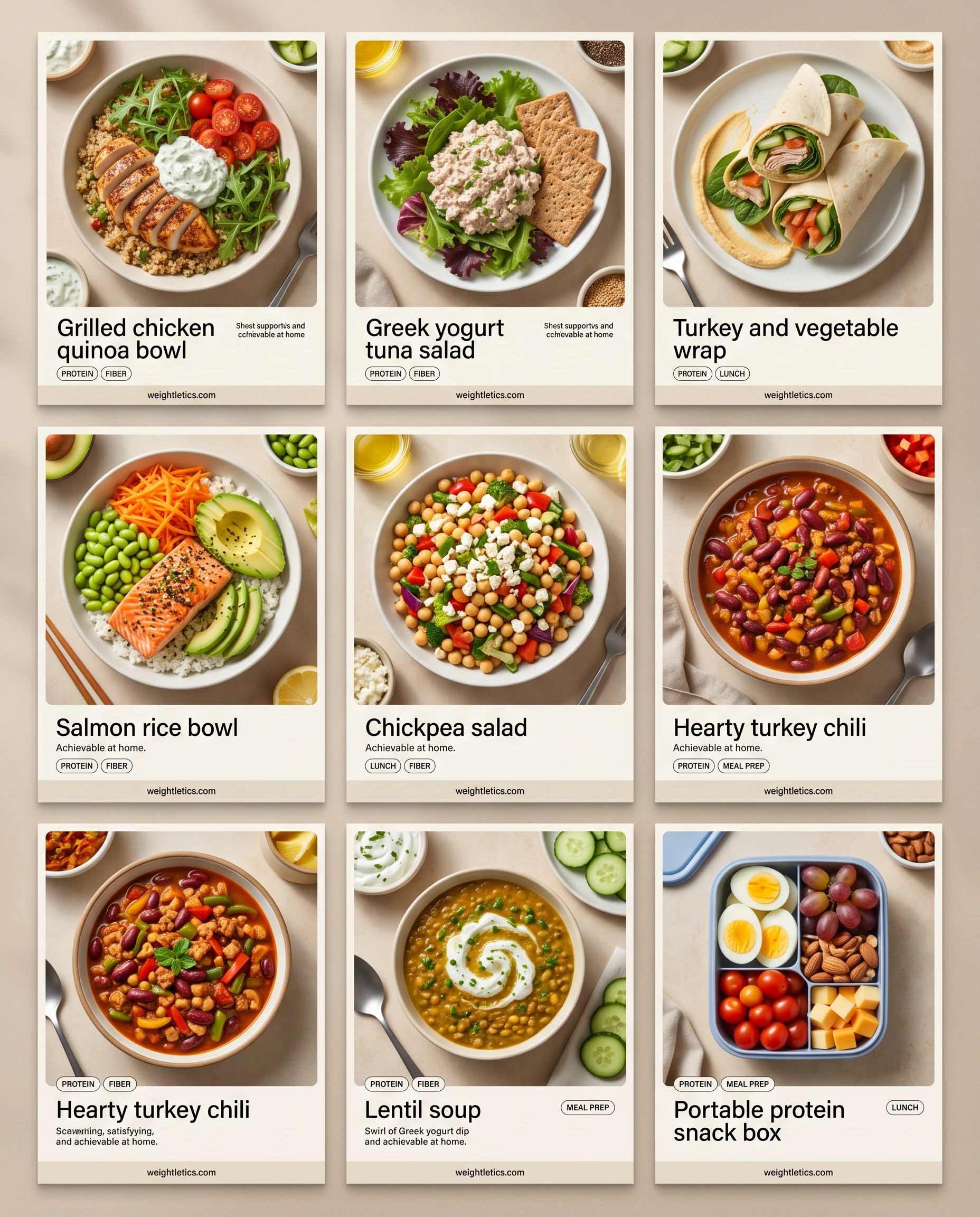
9. Chicken Quinoa Bowl
Chicken + quinoa + arugula + tomatoes + tzatziki
Why it works: Combines protein with vegetables and a fiber-rich grain.
Easy swap: Replace chicken with tofu, salmon or chickpeas.
Meal-prep tip: Keep the tzatziki separate until you’re ready to eat.
10. Greek Yogurt Tuna Salad
Tuna + Greek yogurt + greens + whole-wheat crackers
Why it works: Greek yogurt can replace some or all of the mayonnaise while providing additional protein.
Easy swap: Add cucumber, celery or chopped peppers for extra crunch.
11. Turkey & Veggie Wrap
Turkey + vegetables + hummus + fiber-rich tortilla
Why it works: An easy combination of protein, vegetables and a fiber-rich wrap.
Easy swap: Use chicken or tuna instead of turkey.
Low-appetite option: Make a half wrap rather than a full one.
12. Salmon Edamame Rice Bowl
Salmon + brown rice + edamame + carrots + avocado
Why it works: Combines fish and edamame with vegetables, whole grains and healthy fats.
Easy swap: Use shrimp, tofu or canned salmon.
13. Chickpea Feta Salad
Chickpeas + vegetables + feta + olive oil + lemon
Why it works: Chickpeas provide plant protein and fiber alongside vegetables.
Add protein: Add a boiled egg, tuna or grilled chicken if desired.
14. Turkey & Bean Chili
Lean turkey + kidney beans + peppers + tomatoes
Why it works: Beans and turkey provide a protein-rich combination, while vegetables add flavor and fiber.
Meal-prep tip: Make a larger batch and freeze individual portions.
15. Lentil Soup & Cucumber Yogurt Dip
Lentil soup + Greek yogurt dip + cucumber
Why it works: Lentils provide plant protein and fiber, while Greek yogurt adds another protein source.
Make it lighter: Start with a smaller bowl of soup if your appetite is low.
16. Protein Snack Box
Eggs + grapes + nuts + tomatoes + cheese
Why it works: A flexible combination of protein-rich foods, fruit and vegetables.
Easy swap: Replace grapes with berries, apple slices or melon.
Best for: Lunch when you prefer several small foods instead of one large meal.
GLP-1 Dinner Ideas (10)
17. Salmon, Broccoli & Sweet Potato
Roasted salmon + broccoli + baked sweet potato
Why it works: A simple dinner built around fish, vegetables and a fiber-rich carbohydrate.
Easy swap: Use trout or another fish you enjoy.
18. Chicken & Vegetable Skillet
Chicken + peppers + onions + brown rice
Why it works: One-pan preparation makes it easy to combine protein, vegetables and a whole-grain carbohydrate.
Meal-prep tip: Cook extra chicken and vegetables for tomorrow’s lunch.
19. Turkey Taco Bowl
Ground turkey + beans + lettuce + corn + salsa + avocado
Why it works: Beans and turkey provide protein while vegetables and avocado add variety.
Easy swap: Use chicken, tofu or black beans.
Low-appetite option: Serve a smaller portion over lettuce rather than a large amount of rice.
20. Shrimp & Vegetable Stir-Fry
Shrimp + snap peas + carrots + brown rice
Why it works: Quick-cooking shrimp makes this an easy weeknight meal with vegetables and a whole grain.
Easy swap: Use chicken, tofu or edamame.
21. Crispy Tofu Quinoa Bowl
Tofu + quinoa + bok choy + miso dressing
Why it works: A plant-based combination of tofu, vegetables and a fiber-rich grain.
Easy swap: Use chickpeas or edamame for a different plant-protein option.
22. Turkey Meatballs & Zucchini Noodles
Turkey meatballs + tomato sauce + zucchini noodles
Why it works: A protein-focused alternative to a traditional pasta-based meal.
Easy swap: Use whole-grain pasta if you prefer it.
23. Lentil Vegetable Stew
Lentils + spinach + carrots + vegetables
Why it works: Lentils provide plant protein and fiber in a warm, spoonable meal.
Meal-prep tip: This is ideal for making ahead and portioning for several meals.
24. Stuffed Bell Peppers
Ground chicken + black beans + corn + bell peppers
Why it works: Combines protein, legumes and vegetables in one meal.
Easy swap: Replace chicken with lean turkey or lentils.
25. Salmon Edamame Bowl
Salmon + brown rice + broccoli + edamame + sesame dressing
Why it works: Fish and edamame provide protein alongside vegetables and a whole grain.
Easy swap: Use tofu or shrimp instead of salmon.
26. Chicken & Bean Chili
Chicken + beans + tomatoes + vegetables + cheddar
Why it works: A one-pot meal combining protein, legumes and vegetables.
Make it lighter: Use a small amount of cheese as a topping rather than mixing a large amount into the chili.
Small Meals for Low Appetite Days (8)
When a full meal feels like too much, smaller portions or simpler foods may be easier to manage. Choose options that you personally tolerate well.
27. Greek Yogurt & Raspberries
Greek yogurt + raspberries
Why it works: Small serving with protein and fruit.
Add-on: Chia seeds or a few nuts if you want more texture and energy.
28. Egg & Avocado Cracker
Sliced egg + avocado + whole-grain cracker
Why it works: A small combination of protein, healthy fat and carbohydrate.
Easy swap: Use whole-grain toast instead of crackers.
29. Cottage Cheese & Mandarin
Cottage cheese + mandarin orange
Why it works: A simple pairing of protein-rich cottage cheese and fruit.
Easy swap: Use berries or pineapple.
30. Small Bowl of Soup
Lentil soup or another soup you tolerate well
Why it works: A small bowl can be easier to approach than a large solid meal.
Add protein: Include Greek yogurt, an egg or another protein-rich side if desired.
31. Mini Turkey & Spinach Wrap
Turkey + spinach + small tortilla
Why it works: A smaller portion of a familiar meal.
Easy swap: Use chicken or hummus.
32. Vegetable Egg Bites
Eggs + cheese + vegetables
Why it works: Bite-sized portions make them easy to portion according to appetite.
Meal-prep tip: Make a batch and refrigerate individual portions.
33. Tuna & Tomato Plate
Tuna salad + grape tomatoes
Why it works: Provides protein without requiring a large meal.
Add-on: Add a few whole-grain crackers if you want a carbohydrate.
34. Apple & String Cheese
Apple slices + string cheese
Why it works: Simple combination of fruit and protein-rich cheese.
Easy swap: Try pear slices or berries.
Protein Focused GLP-1 Meals (8)
Protein is an important part of a balanced eating pattern, particularly when you’re eating smaller meals. The following ideas put a protein-rich food at the center of the meal.
35. Salmon & Asparagus
Baked salmon + asparagus
Why it works: Salmon provides protein alongside a vegetable.
Complete the meal: Add quinoa, farro or sweet potato if desired.
36. Chicken, Egg & Edamame Salad
Chicken + egg + edamame + greens + sunflower seeds
Why it works: Combines several protein-rich ingredients in one salad.
Easy swap: Use tofu instead of chicken.
37. Turkey & Bean Chili
Turkey + beans + vegetables
Why it works: Combines animal and plant protein sources.
Meal-prep tip: Make a batch for multiple meals.
38. Berry Protein Smoothie
Protein powder + Greek yogurt + berries + spinach + nut butter + milk
Why it works: Several protein-rich ingredients can be combined in a drinkable meal.
Easy swap: Use a milk or fortified plant-based alternative that you prefer.
39. Chicken & Lentil Stew
Chicken + lentils + vegetables
Why it works: Combines chicken with a plant protein and fiber-rich legume.
Make ahead: Stews usually work well for batch cooking.
40. Cottage Cheese Berry Parfait
Cottage cheese + berries + almonds
Why it works: Cottage cheese provides protein while fruit and nuts add variety.
Easy swap: Use Greek yogurt.
41. Turkey Sausage Egg Scramble
Eggs + turkey sausage + peppers
Why it works: A protein-centered breakfast or lunch.
Watch the richness: Choose a leaner sausage and adjust the amount according to preference.
42. Tofu, Broccoli & Brown Rice
Seared tofu + broccoli + brown rice
Why it works: A plant-based meal combining tofu, vegetables and whole grains.
Add flavor: Try sesame seeds, ginger, herbs or a small amount of sauce.
Fiber-Rich GLP-1 Foods and Meals (8)
Fiber is found in foods such as beans, lentils, vegetables, fruit, whole grains, nuts and seeds. If you’re increasing fiber, do so gradually and make sure you’re getting enough fluids, particularly if your digestive system is sensitive.
43. Raspberry Flax Overnight Oats
Oats + ground flaxseed + raspberries
Why it works: Combines several naturally fiber-rich ingredients.
Add protein: Stir in Greek yogurt or another protein source.
44. Lentil Vegetable Soup
Lentils + carrots + spinach + vegetables
Why it works: Lentils provide fiber and plant protein.
Easy swap: Add white beans or chickpeas.
45. Chickpea Tahini Bowl
Roasted chickpeas + arugula + tomatoes + tahini
Why it works: Chickpeas and vegetables provide fiber, while tahini adds healthy fats.
Add protein: Add grilled chicken, tofu or salmon if desired.
46. Black Bean Veggie Tacos
Black beans + vegetables + whole-grain tortillas
Why it works: Beans and whole grains provide fiber alongside vegetables.
Easy swap: Use chickpeas or lentils.
47. Quinoa Edamame Salad
Quinoa + edamame + corn + bell peppers + lime
Why it works: Combines whole grains, vegetables and legumes.
Meal-prep tip: Keep dressing separate until serving.
48. Salmon, Brussels Sprouts & Farro
Salmon + roasted Brussels sprouts + farro
Why it works: Combines protein with vegetables and a whole grain.
Easy swap: Use quinoa or barley instead of farro.
49. Avocado Hemp Toast
Whole-grain bread + avocado + hemp seeds
Why it works: Whole grains, avocado and seeds provide a combination of fiber and healthy fats.
Add protein: Top with an egg or cottage cheese.
50. Tofu Vegetable Barley Bowl
Tofu + vegetables + barley
Why it works: A plant-based meal combining protein-rich tofu with a whole grain and vegetables.
Easy swap: Use tempeh or edamame.
What to Eat for Dinner While on GLP-1?
Dinner doesn’t need to be complicated when you’re taking a GLP-1 medication. A practical starting point is to build your meal around a manageable portion of protein, vegetables, and a fiber-rich carbohydrate, with a source of healthy fat if you enjoy it and tolerate it well.
You don’t need to force yourself to finish a large meal if your appetite is lower than usual. Instead, adjust the portion to what feels comfortable and focus on making the food you do eat nutrient-dense.
Simple GLP-1 dinner formula:
Protein + vegetables + fiber-rich carbohydrate + optional healthy fat
Build Your Dinner
Choose a protein
Chicken • Salmon • Shrimp • Turkey • Eggs • Tofu • Beans • Lentils
Add vegetables
Broccoli • Spinach • Peppers • Carrots • Zucchini • Greens • Bok choy
Choose a fiber-rich carbohydrate
Quinoa • Brown rice • Farro • Barley • Beans • Lentils • Sweet potato
Add a healthy fat if desired
Avocado • Olive oil • Tahini • Nuts • Seeds
This gives you plenty of flexibility without turning dinner into a rigid “GLP-1 diet.”
Dinner can be as simple as you want, especially if your appetite is low. I focus on a comfortable portion of protein, plenty of veggies, a fiber rich carb, and some healthy fat. When I’m not feeling hungry, I make my plate smaller or turn a couple snacks into a meal. Here are some easy dinner combos you can check out:
10 Easy GLP-1 Dinner Ideas
1. Salmon, Broccoli & Sweet Potato
Roasted salmon + broccoli + baked sweet potato
Why it works: A simple combination of protein, vegetables, and a fiber-rich carbohydrate.
Easy swap: Use trout or another fish you enjoy.
Best for: A simple weeknight dinner.
PROTEIN FIBER DINNER
2. Chicken & Vegetable Skillet
Chicken + bell peppers + onions + brown rice
Why it works: A one-pan meal that combines protein, vegetables, and a whole-grain carbohydrate.
Easy swap: Replace chicken with tofu or shrimp.
Meal-prep tip: Cook extra chicken and vegetables to use in tomorrow’s lunch.
PROTEIN MEAL PREP DINNER
3. Turkey Taco Bowl
Ground turkey + beans + lettuce + corn + salsa + avocado
Why it works: Turkey and beans provide protein, while vegetables and avocado add variety and texture.
Easy swap: Use black beans as the main protein or replace turkey with chicken.
Make it smaller: Reduce the rice or other carbohydrate portion if a large bowl feels like too much.
PROTEIN FIBER DINNER
4. Shrimp & Vegetable Stir-Fry
Shrimp + snap peas + carrots + brown rice
Why it works: Quick-cooking shrimp makes this an easy dinner with protein, vegetables, and a whole grain.
Easy swap: Use tofu, chicken, or edamame.
Flavor idea: Add ginger, garlic, lime, or a small amount of your favorite stir-fry sauce.
PROTEIN QUICK DINNER
5. Crispy Tofu Quinoa Bowl
Tofu + quinoa + bok choy + miso dressing
Why it works: A plant-based combination of tofu, vegetables, and a fiber-rich grain.
Easy swap: Try edamame or chickpeas instead of tofu.
Meal-prep tip: Cook the quinoa and vegetables ahead of time and assemble when ready to eat.
PLANT-BASED FIBER DINNER
6. Turkey Meatballs & Zucchini Noodles
Turkey meatballs + tomato sauce + zucchini noodles
Why it works: A protein-focused dinner with vegetables and a flavorful tomato-based sauce.
Easy swap: Serve the meatballs over whole-grain pasta if you prefer it.
Tip: Add a small portion of pasta, quinoa, or another carbohydrate if you want a more substantial meal.
PROTEIN VEGETABLES DINNER
7. Lentil Vegetable Stew
Lentils + spinach + carrots + other vegetables
Why it works: Lentils provide plant protein and fiber in a warm, easy-to-serve meal.
Easy swap: Use chickpeas or white beans.
Meal-prep tip: Make a larger batch and refrigerate or freeze individual portions.
FIBER PLANT-BASED MEAL PREP
8. Stuffed Bell Peppers
Ground chicken + black beans + corn + bell peppers
Why it works: Combines protein, legumes, and vegetables in one convenient meal.
Easy swap: Use lean turkey, lentils, or extra beans instead of chicken.
Tip: Add a little cheese or avocado for extra flavor if desired.
PROTEIN FIBER DINNER
9. Salmon & Edamame Bowl
Salmon + brown rice + broccoli + edamame + sesame dressing
Why it works: Combines fish and edamame with vegetables and a whole grain.
Easy swap: Use tofu or shrimp instead of salmon.
Make it smaller: Reduce the rice and keep the salmon, vegetables, and edamame.
PROTEIN FIBER DINNER
10. Chicken & Bean Chili
Chicken + beans + tomatoes + vegetables + cheddar
Why it works: A one-pot meal combining protein, legumes, and vegetables.
Easy swap: Use turkey instead of chicken or make it vegetarian with extra beans and lentils.
Meal-prep tip: Chili is easy to portion and reheat for another meal.
PROTEIN FIBER MEAL PREP
What If Dinner Feels Like Too Much?
If your appetite is low, you don’t have to turn dinner into a large plate of food.
Try reducing the portion while keeping the basic components of the meal. For example:
Instead of:
A large chicken, rice, and vegetable bowl
Try:
A smaller portion of chicken + vegetables + a few spoonfuls of rice.
Or choose something simpler, such as:
- Greek yogurt with berries and nuts
- A small bowl of lentil soup
- Eggs with avocado and toast
- Cottage cheese with fruit
- A small turkey wrap
The goal isn’t to eat as little as possible. It’s to find a portion and combination of foods that feels comfortable while still providing useful nutrition.
A Simple Dinner Decision Guide
Not sure what to make?
1. Start with protein
Chicken / fish / turkey / tofu / beans
↓
2. Add vegetables
Broccoli / peppers / greens / carrots
↓
3. Choose a fiber-rich carbohydrate
Beans / quinoa / brown rice / sweet potato
↓
4. Add flavor
Avocado / tahini / olive oil / herbs / salsa
↓
Adjust the portion to your appetite.
What Foods Should You Avoid Eating While on GLP-1?
There isn’t a universal list of foods that everyone taking a GLP-1 medication needs to completely avoid. However, some foods may be harder to tolerate, particularly when appetite is reduced or digestion feels slower.
Large, greasy meals and fried foods may feel especially uncomfortable for some people. Highly sugary foods and drinks, heavily processed foods, and excessive alcohol are also worth limiting as part of an overall balanced eating pattern.
The key is to pay attention to how you feel after eating, rather than assuming that a particular food is automatically off-limits.
Foods That May Be Harder to Tolerate
Very Large or High-Fat Meals
Examples include:
- Jumbo burgers with fries
- Heavy creamy pasta dishes
- Large portions of fatty meats
- Very rich takeout meals
Large, high-fat meals can feel particularly heavy for some people. If this happens to you, try a smaller portion and choose a leaner protein with vegetables and a fiber-rich carbohydrate.
Try instead: Grilled chicken, roasted fish, vegetables, and a small serving of quinoa or sweet potato.
Deep-Fried Foods
Examples include:
- Fried chicken
- French fries
- Fried appetizers
- Other heavily fried meals
Fried foods can be rich and difficult for some people to tolerate.
Try instead: Roasted, grilled, baked, or air-fried versions of your favorite foods.
Very Sugary Drinks and Foods
Examples include:
- Sugary sodas
- Sweetened coffee drinks
- Candy
- Large desserts
- Sugar-heavy snacks
These foods can add a lot of sugar without providing much nutritional value.
Try instead: Water, unsweetened drinks, fruit, Greek yogurt with berries, or a smaller portion of a dessert you genuinely enjoy.
Highly Processed Snack Foods
Examples include:
- Chips
- Cookies
- Packaged pastries
- Candy
- Highly processed snack foods
You don’t need to eliminate these foods completely. The bigger picture is making nutrient-dense foods the foundation of your meals.
Try instead: Fruit with Greek yogurt, nuts and fruit, hummus with vegetables, or whole-grain crackers with cottage cheese.
Alcohol
Alcohol may not be appropriate for everyone taking a GLP-1 medication, and individual circumstances and medication instructions matter. If you drink, follow your healthcare professional’s advice and your medication information.
If alcohol makes you feel unwell, particularly when you’re eating less than usual, it’s worth discussing with your healthcare professional.
What Should You Eat Instead?
Rather than thinking in terms of “good foods” and “bad foods,” try building meals around foods that provide useful nutrition and that you personally tolerate well.
Choose more often:
Protein
Chicken • Fish • Eggs • Greek yogurt • Cottage cheese • Tofu • Beans • Lentils
Vegetables & fruit
Broccoli • Spinach • Peppers • Berries • Apples • Citrus • Carrots
Fiber-rich carbohydrates
Oats • Quinoa • Brown rice • Beans • Lentils • Whole grains • Sweet potatoes
Healthy fats
Avocado • Nuts • Seeds • Nut butters • Olive oil • Tahini
And remember: portion size matters too. A food that feels uncomfortable as part of a large meal may be perfectly manageable in a smaller portion.
Instead ofTryLarge fried mealSmaller grilled mealJumbo burger + friesSmaller burger + vegetablesSugary sodaWater or unsweetened drinkLarge dessertFruit + Greek yogurtHeavy creamy pastaPasta with vegetables + lean proteinLarge portionSmaller portion, eat slowly
What to Eat When Your Appetite Is Low
When a full meal feels like too much, you don’t necessarily need to force yourself to eat a large plate. Some people find that smaller, simpler meals or snacks are easier to manage when their appetite is reduced.
A useful approach is to choose something that is nutrient-dense, reasonably easy to eat, and comfortable for you. You can always have more later if your appetite returns.
Instead of worrying about creating a perfect meal, start with a small portion of a protein-rich food and add fruit, vegetables, whole grains, or another food that you tolerate well.
6 Types of Foods to Try
1. Soft Foods
Soft foods can be a convenient option when you don’t feel like eating something substantial.
Try:
- Greek yogurt
- Cottage cheese
- Scrambled eggs
- Oatmeal
- Soft overnight oats
Easy combination:
Greek yogurt + berries + chia seeds
2. Light Meals
If a full dinner feels overwhelming, a smaller bowl or plate can be a good starting point.
Try:
- Lentil soup
- Vegetable soup with chicken
- Egg-drop soup
- Small protein salad
- Half a turkey wrap
Tip: Start with a smaller portion. You can always add more if you’re still hungry.
3. Cold Foods
Some people prefer cold foods when their appetite is low.
Try:
- Greek yogurt with berries
- Cottage cheese with pineapple
- Chilled fruit
- A small smoothie
- Cold chicken or turkey with cucumber
Easy combination:
Cottage cheese + berries + a few nuts
4. Simple Savory Foods
If sweet foods don’t appeal to you, keep things simple and savory.
Try:
- Eggs with avocado
- Hummus with cucumber
- Turkey slices with whole-grain crackers
- Small bowl of soup
- Tuna with tomatoes
Easy combination:
Boiled egg + avocado + whole-grain crackers
5. Protein-Rich Options
When you’re eating smaller amounts, including a protein source can help make your meal more nutritionally substantial.
Try:
- Eggs
- Greek yogurt
- Cottage cheese
- Fish
- Chicken or turkey
- Tofu
- Beans or lentils
You don’t need to make every small meal extremely high in protein. Just look for easy ways to include a protein-rich food.
6. Fiber-Rich Options
If you tolerate fiber well, include foods such as:
- Oats
- Berries
- Beans
- Lentils
- Chia seeds
- Ground flaxseed
- Vegetables
- Whole grains
Important: If you’re increasing your fiber intake, do it gradually and pay attention to how your digestive system responds.
A Simple Low-Appetite Meal Formula
This would make an excellent visual decision guide in your article.
Start Small
Choose 1 protein
Greek yogurt • Eggs • Cottage cheese • Fish • Turkey • Tofu
↓
Add 1 fruit or vegetable
Berries • Banana • Cucumber • Tomatoes • Spinach
↓
Add something else if you want it
Oats • Whole-grain crackers • Toast • Avocado • Nuts
↓
Still hungry?
Add more.
Not hungry?
You don’t need to force a large portion.
This is much more useful than simply saying “eat small meals.”
8 Easy Small-Meal Ideas
I’d then keep your original eight ideas, but upgrade them into the same visual card format as the rest of the article.
1. Greek Yogurt & Raspberries
Greek yogurt + raspberries
Why it works: A simple combination of protein-rich yogurt and fruit.
Easy swap: Use blueberries, strawberries, or another fruit.
Best for: Breakfast or a small snack.
PROTEIN FRUIT SMALL MEAL
2. Egg & Avocado Cracker
Sliced egg + avocado + whole-grain cracker
Why it works: Combines protein, healthy fats, and a small portion of carbohydrate.
Easy swap: Use whole-grain toast instead of crackers.
Best for: A savory small meal.
PROTEIN SMALL MEAL SAVORY
3. Cottage Cheese & Mandarin
Cottage cheese + mandarin orange segments
Why it works: A simple protein-rich food paired with fruit.
Easy swap: Try pineapple, berries, or melon.
Best for: Breakfast or snack.
PROTEIN FRUIT SMALL MEAL
4. Small Bowl of Soup
Lentil soup or egg-drop soup
Why it works: A warm, smaller-format meal that can be easier to approach than a large plate.
Easy swap: Try chicken and vegetable soup.
Add-on: Add Greek yogurt, an egg, or another protein-rich food if desired.
LIGHT PROTEIN SMALL MEAL
5. Mini Turkey & Spinach Wrap
Turkey + spinach + small whole-grain tortilla
Why it works: A smaller version of a familiar meal with protein and vegetables.
Easy swap: Use chicken, tuna, or hummus.
Best for: Lunch or a light dinner.
PROTEIN LUNCH SMALL MEAL
6. Vegetable Egg Bites
Eggs + cheese + vegetables
Why it works: Bite-sized portions make it easy to serve according to your appetite.
Easy swap: Add spinach, peppers, mushrooms, or tomatoes.
Meal-prep tip: Make several at once and refrigerate them for quick meals.
PROTEIN MEAL PREP SMALL MEAL
7. Tuna & Tomato Plate
Tuna salad + grape tomatoes
Why it works: A simple protein-rich option that doesn’t require a large serving.
Easy swap: Use chicken or cottage cheese.
Add-on: Add a few whole-grain crackers if you want a carbohydrate.
PROTEIN QUICK SMALL MEAL
8. Apple & String Cheese
Apple slices + string cheese
Why it works: An easy combination of fruit and a protein-rich food.
Easy swap: Try pear, berries, or grapes.
Add-on: Add a small handful of nuts if desired.
PROTEIN FRUIT SMALL MEAL
When to check with your healthcare professional: If reduced appetite is making it difficult to eat or drink enough, or you’re experiencing persistent vomiting, severe abdominal pain, signs of dehydration, or significant unintended weight loss, contact your healthcare professional rather than trying to manage the problem with meal ideas alone.
Simple 7-Day GLP-1 Meal Plan
If you’re looking for a simple way to put these GLP-1 meal ideas together, this 7-day plan gives you a place to start.
It isn’t a strict diet or prescription. Mix and match meals based on your appetite, preferences, dietary needs, schedule, and the foods you tolerate well. Portions can also be adjusted depending on how much feels comfortable.
If a full meal feels like too much, you can use one of the smaller meal ideas from the low-appetite section instead.
7-Day Meal Plan at a Glance
DayBreakfastLunchDinnerOptional SnackMondayGreek yogurt + berries + chiaTuna salad bowlChicken + brown rice + broccoliApple + string cheeseTuesdayProtein overnight oatsTurkey & veggie wrapShrimp stir-fry + brown riceCottage cheese + berriesWednesdayEggs + spinach + toastSalmon quinoa bowlLentil vegetable stewVeggies + hummusThursdayBerry protein smoothieChickpea saladCrispy tofu + vegetables + quinoaBoiled egg + fruitFridayProtein pancakes + strawberriesTurkey & bean chiliSalmon + farro + spinachGreek yogurt + berriesSaturdayCottage cheese + fruitProtein snack boxChicken + sweet potato + vegetablesApple + peanut butterSundayMushroom & turkey omeletLentil & vegetable wrapTurkey taco bowlYogurt + almonds
A note about the snack column
“Optional” is intentional. You don’t need to eat a snack simply because it’s listed. If you’re hungry between meals, choose one that works for you. If you’re not hungry, skip it.
How to Use This Meal Plan
Think of the plan as a template, not a set of rules.
1. Adjust portions to your appetite
You don’t need to eat the same amount as someone else.
A meal can be made smaller when your appetite is low, or increased when you’re genuinely hungry.
2. Swap foods freely
Don’t like salmon?
Try chicken, turkey, tofu, beans, or another protein you enjoy.
Don’t have quinoa?
Use brown rice, farro, barley, or another whole-grain carbohydrate.
3. Repeat meals
You don’t need seven different breakfasts, seven different lunches, and seven different dinners.
If overnight oats work well for you, have them twice.
If a batch of chili saves you time, eat it for lunch more than once.
Repeating meals can make meal prep much easier.
Make the 7-Day Plan Easier With Meal Prep
Instead of preparing 28 completely different meals, prepare a few basic ingredients at the beginning of the week.
Prepare 2 proteins
For example:
Chicken + salmon
Prepare 2 vegetables
For example:
Broccoli + bell peppers
Prepare 1–2 carbohydrates
For example:
Brown rice + quinoa
Prepare 1–2 easy sauces
For example:
Tzatziki + salsa
Then mix and match them throughout the week.
Example
Monday: Chicken + rice + broccoli
↓
Tuesday: Chicken + quinoa + peppers
↓
Wednesday: Salmon + rice + broccoli
↓
Thursday: Tofu + quinoa + peppers
You get variety without having to cook an entirely new meal every night.
What If You Have Little Appetite?
You don’t need to force yourself to follow the full meal plan when your appetite is low.
Instead, swap the meal for a smaller option from the “What to Eat When Your Appetite Is Low” section.
For example:
Planned dinner:
Chicken + rice + broccoli
Smaller option:
A small bowl of chicken and vegetable soup
Or:
Planned breakfast:
Protein pancakes + strawberries
Smaller option:
Greek yogurt + berries
The goal is to make the plan flexible enough to work with your appetite, rather than turning it into another set of food rules.
A Simple Weekly Formula
I’d add this as a visual immediately after the table:
Build Your Week
Breakfast
Protein + fruit + fiber
↓
Lunch
Protein + vegetables + fiber-rich carbohydrate
↓
Dinner
Protein + vegetables + fiber-rich carbohydrate
↓
Optional snack
Protein + fruit/vegetables
↓
Adjust portions to your appetite.
Easy GLP-1 Meal Swaps
If the plan says…You can swap it for…ChickenTurkey, fish, tofu, beansSalmonTrout, shrimp, tofuBrown riceQuinoa, farro, barleyGreek yogurtCottage cheeseBerriesApple, orange, melonBroccoliGreen beans, spinach, peppersWhole-grain wrapWhole-grain breadChickpeasBlack beans, lentils
Remember: A meal plan is a tool, not a rulebook. If you’re not hungry, you don’t need to force yourself to finish a planned portion. If you’re hungry later, you can eat again. Focus on your overall eating pattern rather than getting every meal exactly right.
GLP-1 Meal Prep Made Easy
Meal prep doesn’t have to mean spending your entire Sunday cooking. A simpler approach is to prepare a few protein, vegetable, and carbohydrate options that you can combine into different meals throughout the week.
This can be especially useful when your appetite varies. You can assemble a smaller meal when you’re not very hungry or add more components when you want something more substantial.
The goal isn’t to prep seven perfect meals. It’s to make nutritious choices easier when you’re short on time or don’t feel like cooking.
The Simple GLP-1 Meal Prep Formula
Think in four building blocks:
1. Protein
Chicken • Salmon • Eggs • Turkey • Tofu • Beans • Lentils
↓
2. Vegetables
Broccoli • Peppers • Carrots • Spinach • Zucchini • Greens
↓
3. Fiber-rich carbohydrate
Brown rice • Quinoa • Farro • Barley • Sweet potatoes
↓
4. Flavor
Tzatziki • Salsa • Hummus • Tahini • Lemon • Herbs
Mix and match these throughout the week instead of preparing a separate recipe for every meal.
What to Prep Each Week
You don’t need to prepare everything below. Pick a few items that you’ll actually use.
1. Prep 1–2 Protein Sources
Choose foods that can be used in several different meals.
Easy options:
- Roast or grill chicken
- Bake salmon
- Cook lean ground turkey
- Hard-boil eggs
- Bake tofu
- Cook a pot of lentils or beans
Think beyond one meal:
Cooked chicken can become a grain bowl, salad, wrap, or taco bowl.
2. Roast a Tray of Vegetables
Choose 2–4 vegetables and roast them together.
Try:
- Broccoli
- Bell peppers
- Carrots
- Cauliflower
- Brussels sprouts
- Zucchini
Toss with a little olive oil and seasonings, then roast until tender.
Now you’ve got vegetables ready for bowls, wraps, salads, omelets, or dinner plates.
3. Cook One or Two Fiber-Rich Carbohydrates
Pick what you actually enjoy.
Good options include:
- Brown rice
- Quinoa
- Farro
- Barley
- Sweet potatoes
- Oats
You don’t need five different grains sitting in your refrigerator.
One or two is plenty.
4. Prepare Quick Protein Options
Keep a few foods ready for moments when you don’t want to cook.
For example:
- Hard-boiled eggs
- Greek yogurt
- Cottage cheese
- Canned tuna or salmon
- Hummus
- Edamame
These can turn a few leftovers into a meal in minutes.
5. Make Breakfast Easier
Breakfast doesn’t need much prep.
Prepare a few portions of:
Overnight oats
Oats + Greek yogurt + chia seeds + berries
or
Yogurt bowls
Greek yogurt + berries + nuts/seeds
or
Egg bites
Eggs + vegetables + cheese
Now you have something ready when you don’t feel like cooking in the morning.
The 30-Minute Meal Prep Session
I’d add a visual timeline here because this is where your article can become much more actionable.
0–5 minutes
Start your oven and get your protein cooking.
5–10 minutes
Chop vegetables and put them on a roasting tray.
10–15 minutes
Start your rice, quinoa, or other grain.
15–25 minutes
Prepare overnight oats, yogurt bowls, or boiled eggs.
25–30 minutes
Portion everything into containers and add sauces separately.
Done.
You now have ingredients that can become multiple meals.
Turn One Prep Session Into Multiple Meals
This is the part I’d emphasize because it’s more useful than simply saying “meal prep your food.”
Prep:
Grilled chicken
Roasted broccoli & peppers
Quinoa
Then create:
Monday Lunch
Chicken + quinoa + broccoli + tzatziki
Tuesday Dinner
Chicken + roasted peppers + quinoa + avocado
Wednesday Lunch
Chicken + vegetables + whole-grain wrap + hummus
Thursday Dinner
Chicken + broccoli + sweet potato + salsa
Same basic ingredients. Completely different meals.
Keep a “Low-Effort” Food Shelf
This is a particularly useful addition for your article.
Some days you simply won’t want to cook.
Keep a few foods available that can become a meal with almost no preparation:
Refrigerator
- Greek yogurt
- Cottage cheese
- Eggs
- Pre-washed salad greens
- Cooked chicken
- Hummus
Freezer
- Frozen vegetables
- Frozen berries
- Edamame
- Pre-cooked grains
Pantry
- Canned tuna or salmon
- Beans
- Lentils
- Oats
- Whole-grain crackers
- Nut butter
This means “I don’t feel like cooking” doesn’t automatically become “I’ll skip eating.”
Meal Prep for Days When Appetite Is Low
This deserves its own small subsection because it connects directly to the previous section.
If your appetite varies, don’t prepare only large meals.
Instead, keep some small, easy options ready:
- Greek yogurt + berries
- Cottage cheese + fruit
- Boiled eggs
- Small soup portions
- Mini wraps
- Egg bites
- Hummus + cucumber
- Cheese + fruit
You can then choose something based on what feels manageable rather than having to prepare a full meal from scratch.
Don’t Over-Prep
I’d finish with this because it’s a genuinely useful distinction.
Meal prep should make eating easier, not create another chore.
You don’t need seven perfectly portioned containers labeled Monday through Sunday.
Start with:
1–2 proteins + 1–2 vegetables + 1 grain + a few easy extras.
Then mix and match throughout the week.
If you know you’ll only eat three days’ worth of leftovers, prep three days’ worth.
Your GLP-1 Meal Prep Checklist
I’d turn this into a visual checklist:
WEEKLY PREP
☐ 1–2 protein sources
☐ 2–4 vegetables
☐ 1–2 fiber-rich carbohydrates
☐ 1 breakfast option
☐ 2 easy protein snacks
☐ 1–2 sauces/flavor boosters
☐ A few no-cook foods
Prep once → mix & match → adjust portions to your appetite.
GLP-1 Grocery List
A good grocery list doesn’t need to include every ingredient from all 50 meal ideas. Instead, focus on versatile foods that can be mixed and matched into breakfasts, lunches, dinners, and smaller meals.
Choose the foods you enjoy and tolerate well, and adjust the list based on your dietary preferences and household needs.
Protein
Choose several options rather than buying everything.
Fresh / refrigerated
- Chicken breast or thighs
- Lean ground turkey
- Salmon
- Shrimp
- Eggs
- Greek yogurt
- Cottage cheese
- Tofu
- Edamame
Pantry-friendly
- Canned tuna
- Canned salmon
- Black beans
- Chickpeas
- Lentils
Meal-prep tip: Pick 2–3 proteins each week and build several meals around them.
Vegetables
Choose a mix of vegetables that work in bowls, salads, wraps, soups, and dinners.
- Broccoli
- Bell peppers
- Carrots
- Spinach
- Mixed greens
- Arugula
- Cucumbers
- Tomatoes
- Zucchini
- Cauliflower
- Brussels sprouts
- Snap peas
- Bok choy
Shortcut options
Don’t feel like chopping everything?
- Pre-washed salad greens
- Frozen vegetables
- Pre-cut vegetables
- Frozen cauliflower or broccoli
These can make meal prep considerably easier.
Fruit
Choose a few fruits that work for breakfast, snacks, and desserts.
- Berries
- Apples
- Bananas
- Oranges
- Mandarins
- Pineapple
- Grapes
- Melon
- Pears
Easy combinations:
Greek yogurt + berries
Cottage cheese + pineapple
Apple + peanut butter
Cottage cheese + mandarin
Fiber-Rich Carbohydrates
Carbohydrates don’t need to be eliminated when you’re taking a GLP-1 medication.
Choose options that provide fiber and that you enjoy.
- Oats
- Brown rice
- Quinoa
- Farro
- Barley
- Sweet potatoes
- Whole-grain bread
- Whole-grain wraps
- Whole-grain crackers
- Beans
- Chickpeas
- Lentils
Shortcut: Frozen or microwaveable whole grains can be useful when you don’t have time to cook from scratch.
Healthy Fats
You don’t need large amounts. A few versatile options can add flavor and help make meals more satisfying.
- Avocados
- Olive oil
- Nuts
- Seeds
- Chia seeds
- Ground flaxseed
- Hemp seeds
- Peanut butter
- Almond butter
- Tahini
Flavor Boosters
This is an important category because healthy food doesn’t have to be bland.
- Hummus
- Tzatziki
- Salsa
- Tahini
- Lemon
- Lime
- Garlic
- Fresh herbs
- Dried herbs
- Spices
- Low-sugar sauces
- Mustard
Meal-prep trick: Keep two or three different sauces available. The same chicken, vegetables, and grain can taste completely different depending on the sauce.
Low-Appetite Foods
I’d add this category because it directly connects the grocery list to your low-appetite section.
Keep a few easy foods available for days when a full meal doesn’t sound appealing:
- Greek yogurt
- Cottage cheese
- Eggs
- Soup or broth
- Berries
- Applesauce
- Bananas
- Hummus
- Whole-grain crackers
- String cheese
- Pre-cooked chicken or turkey
- Frozen berries for smoothies
This means you have options beyond simply skipping a meal.
The “Buy This First” List
This would be a great visual element because the complete grocery list is fairly long.
If you don’t want to buy everything, start with:
3 Proteins
Chicken • Greek yogurt • Eggs
3 Vegetables
Broccoli • Spinach • Bell peppers
2 Fruits
Berries • Apples
2 Fiber-Rich Carbs
Oats • Brown rice
2 Healthy Fats
Avocado • Nuts or seeds
2 Flavor Boosters
Hummus • Salsa
That’s enough to create several different meals without filling your entire shopping cart.
Turn Your Grocery List Into Meals
I’d add a small visual decision guide here.
What did you buy?
Chicken + broccoli + brown rice
→ Chicken bowl
Greek yogurt + berries + chia
→ Breakfast bowl
Eggs + spinach + avocado + toast
→ Quick breakfast
Tuna + greens + whole-grain crackers
→ Easy lunch
Beans + peppers + corn + avocado
→ Taco bowl
Cottage cheese + fruit + nuts
→ Small meal/snack
Printable GLP-1 Grocery Checklist
I’d actually make this a checkbox graphic rather than leaving it as plain text.
PROTEIN
☐ Chicken
☐ Turkey
☐ Salmon
☐ Shrimp
☐ Eggs
☐ Greek yogurt
☐ Cottage cheese
☐ Tofu
☐ Beans
☐ Lentils
☐ Canned tuna/salmon
VEGETABLES
☐ Broccoli
☐ Spinach
☐ Peppers
☐ Carrots
☐ Greens
☐ Cucumbers
☐ Tomatoes
☐ Zucchini
☐ Cauliflower
FRUIT
☐ Berries
☐ Apples
☐ Bananas
☐ Citrus
☐ Pineapple
☐ Grapes
FIBER-RICH CARBS
☐ Oats
☐ Brown rice
☐ Quinoa
☐ Farro
☐ Barley
☐ Sweet potatoes
☐ Whole-grain wraps/bread
☐ Chickpeas
☐ Beans
HEALTHY FATS
☐ Avocado
☐ Olive oil
☐ Nuts
☐ Seeds
☐ Nut butter
☐ Tahini
FLAVOR
☐ Hummus
☐ Tzatziki
☐ Salsa
☐ Lemon/lime
☐ Herbs
☐ Spices
FAQs
What should I eat for dinner while on GLP-1?
Choose a protein, pile on veggies, and pick a fiber rich grain or beans. Stick to portions that fit your appetite, even if that means smaller plates than before.
What foods should I eat when on a GLP-1 diet?
Pick lots of protein rich foods, fiber packed carbs, loads of fruits and veggies, and healthy fats. Mixing these up makes meals filling and easier on your system.
What foods should I avoid eating while on GLP-1?
I stay away from heavy, greasy, or super sweet meals because they don’t sit well or spike blood sugar. Processed foods and alcohol can also make a rough day worse for some.
Can I eat carbohydrates on GLP-1?
Absolutely. Just focus on fiber rich carbs, like oats, brown rice, beans, and whole grains, which keep you full and keep energy steady.
What are good high protein GLP-1 meals?
Chicken and veggie bowls, cottage cheese with fruit, egg dishes, lentil and bean stews, Greek yogurt parfaits, and grilled fish meals have plenty of protein to keep you going.
What can I eat when I have little appetite?
Snack plates like yogurt, fruit, and cheese, small bowls of soup, eggs, or even just half a wrap work. Stick with soft, cool, or savory foods if that’s easier to handle.
How can I meal prep while taking GLP-1 medication?
Prepare simple proteins, roast a big batch of veggies, make grains like quinoa or rice, and portion out tiny meals. It makes eating quick, satisfying, and not overwhelming.
Sources & Further Reading
Final Takeaway
Making meals work on GLP-1 isn’t about a strict, one size fits all plan. Focusing on proteins, fiber, healthy fats, and comfort keeps your meals tasty, balanced, and easy to handle. My go to is always small, satisfying meals that look after both your appetite and nutrition.
Important: GLP-1 medications are prescription medicines, and nutritional needs can vary depending on your medication, dose, health conditions, and individual circumstances. The meal ideas in this article are general nutrition information, not individualized medical advice. If you have persistent vomiting, severe abdominal pain, difficulty eating or drinking, or significant unintended weight loss, contact your healthcare professional.